 Platform
Review clearance
Identify visible vegetation conditions around trackside infrastructure and review where clearance may need attention.

Solutions
All Solutions Overview RailEyes RailEdge Camera RailEyes TrackViewReal-Time Railway StreamRailEyes ZoningRailEyes Vegetation DetectionRailEyes Map/Track/Lane MatchingRailEyes AnonymizationRailEyes DynamicsRailEyes MapmatchingRailEyes HeatmapsConsultingVegetation monitoring
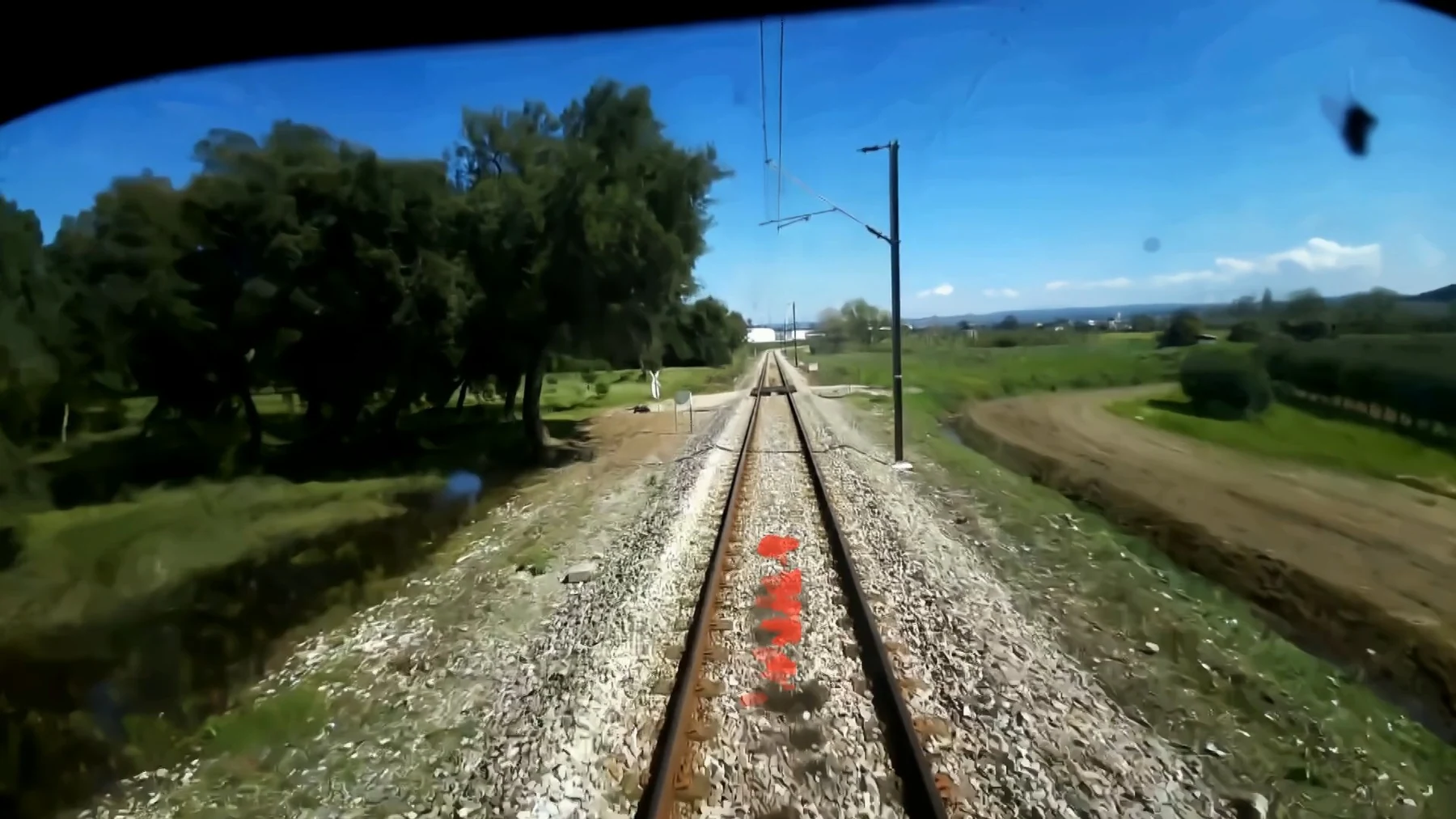
Vegetation management is a recurring railway infrastructure challenge. RailEyes helps teams identify, review, validate, and prioritize visible vegetation conditions using AI-assisted imagery tied to rail location context.
Use case
RailEyes vegetation monitoring is strongest when it supports the people already responsible for safe, sustainable, and cost-aware corridor maintenance. The goal is not to replace expert judgment, but to give teams better evidence and review structure.
Identify visible vegetation conditions around trackside infrastructure and review where clearance may need attention.
Use image evidence and location context to support planning before sending teams into the field.
Turn reviewer feedback into structured labels that can improve vegetation models over time.
Pipeline
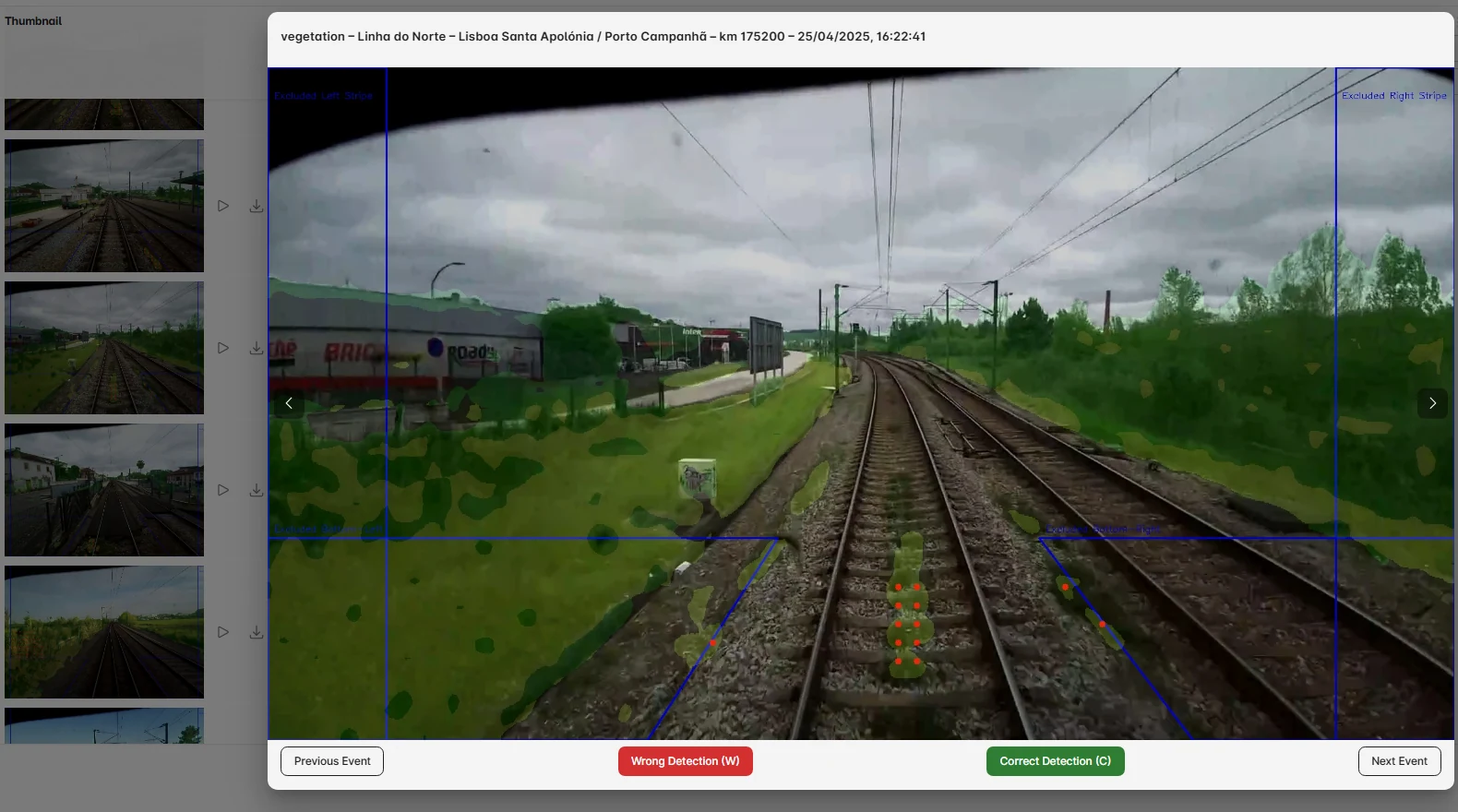
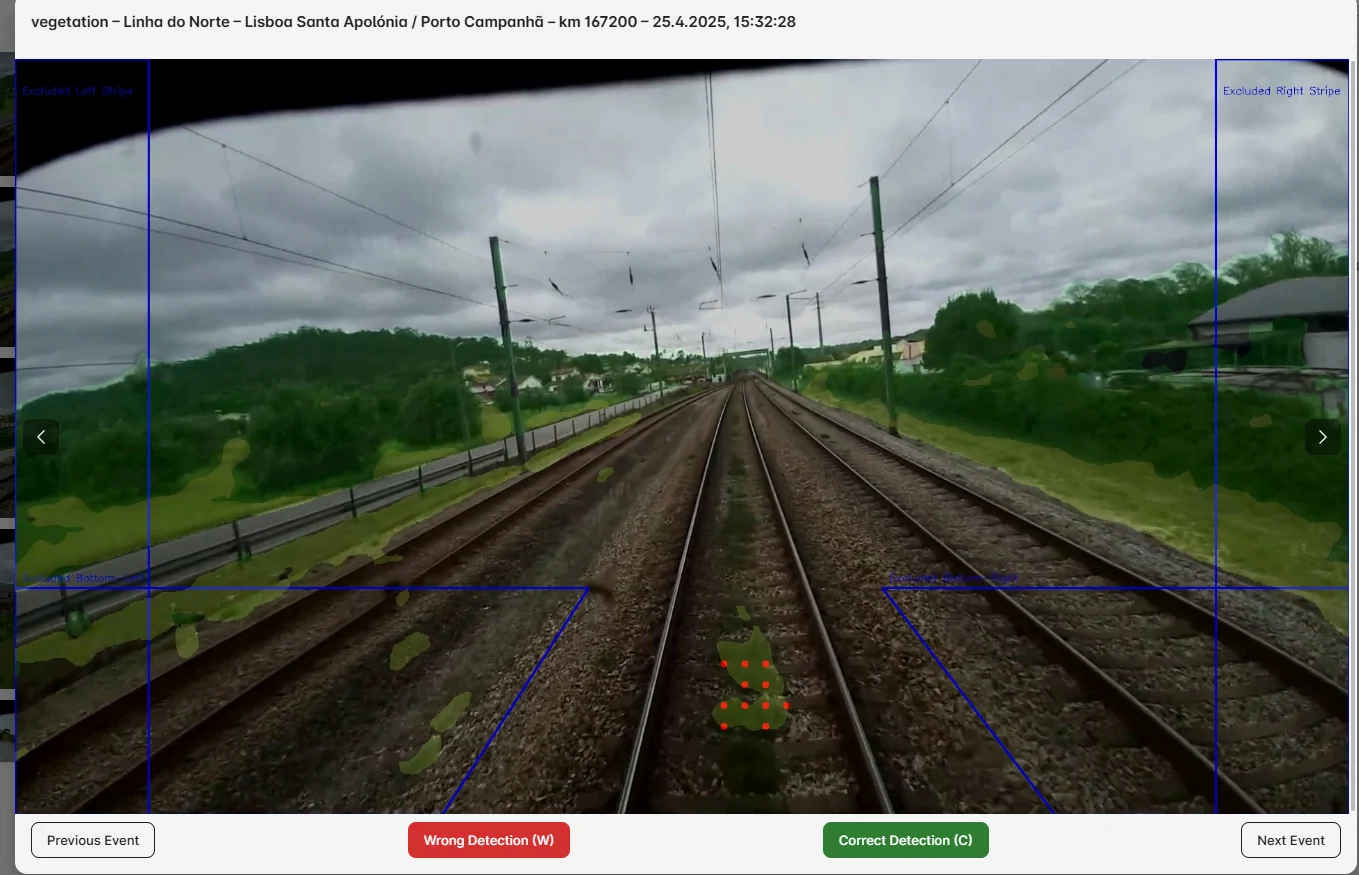
Project documentation describes a vegetation pipeline with semantic segmentation, zone filtering, event thresholds, and a reviewer workflow where teams can mark AI-generated events as correct or wrong.
Use forward-facing railway imagery collected from operating trains, with GPS and rail location context attached to each reviewable segment.
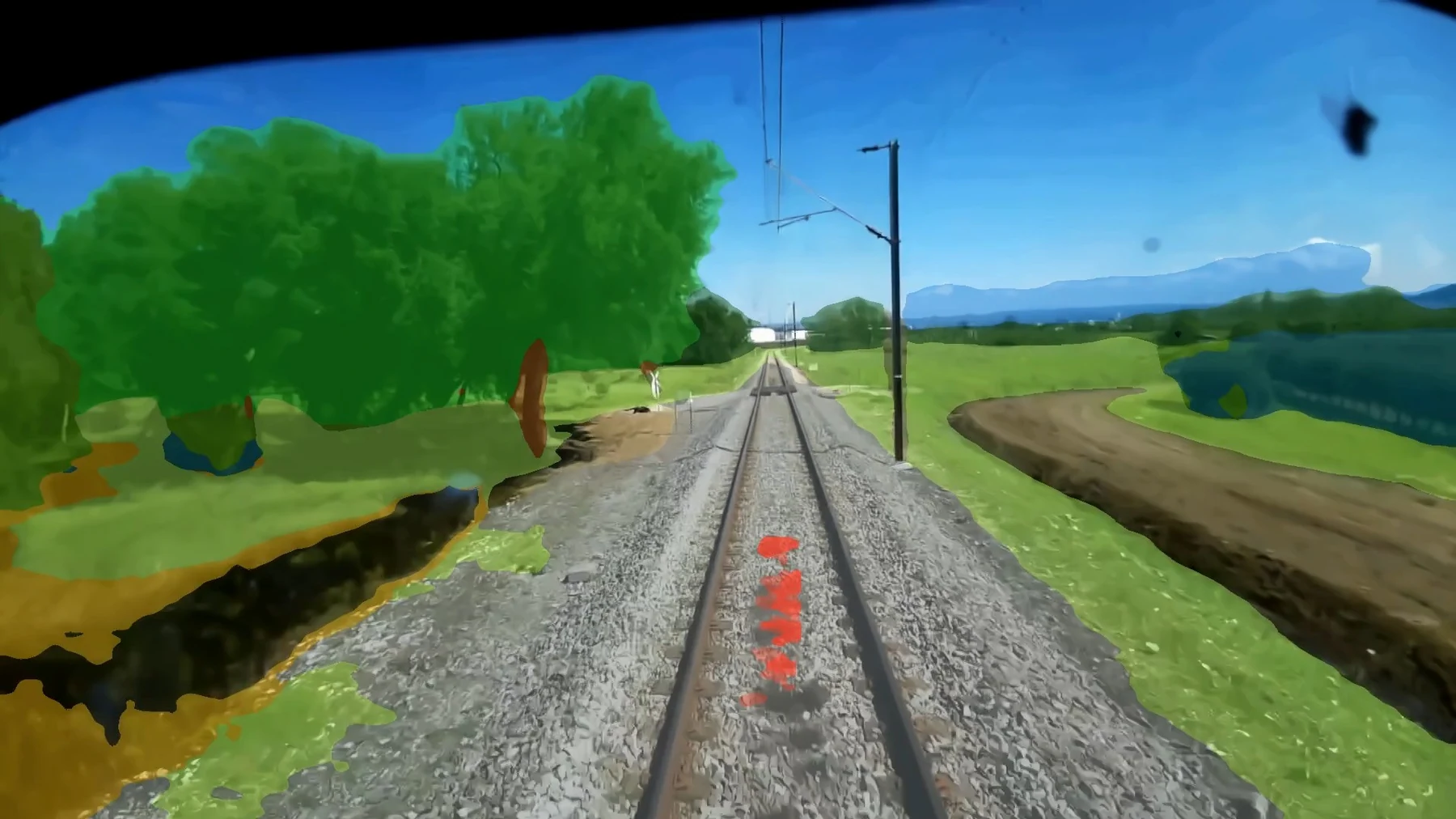
Segment vegetation classes such as high grass, low grass, tree trunks, tree tops, and miscellaneous vegetation in the rail corridor.
Use zones, depth logic, area thresholds, and rail context to focus attention on findings that may matter for maintenance planning.
Let reviewers confirm or reject vegetation events, creating a feedback loop for higher-quality rail-specific training data.
Rail-trained AI
RailEyes proprietary vegetation models are trained and refined on real railway imagery, where generic computer vision models can confuse vegetation with poles, tunnels, overhead equipment, ballast, or trackside structures.
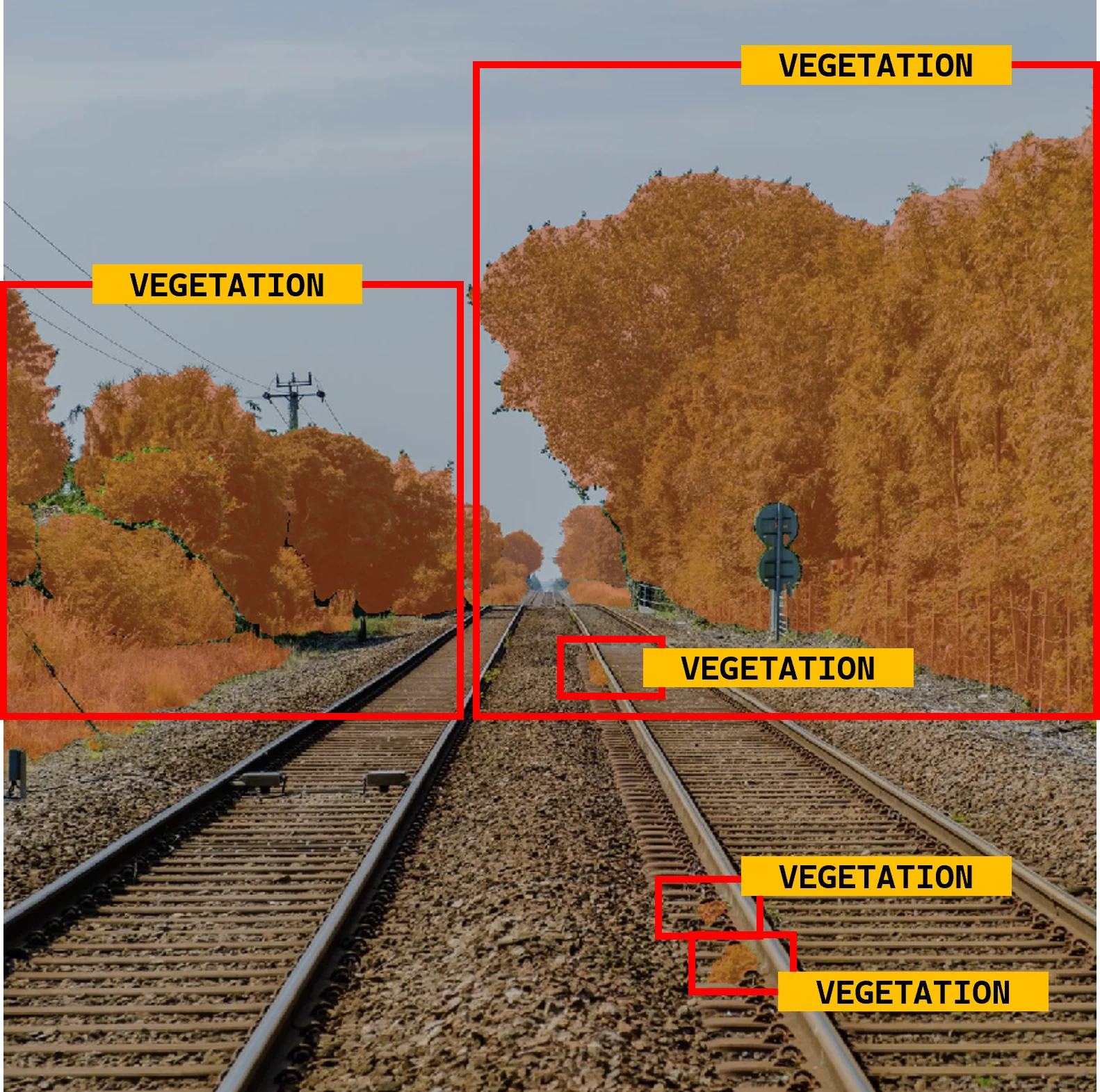
Semantic segmentation separates vegetation into operationally useful classes such as high grass, low grass, tree trunks, tree tops, and miscellaneous growth.
Depth-aware visual context, zones, and event thresholds help focus review on findings that may matter for railway maintenance.
Reviewers can confirm or reject detected events, so maintenance evidence stays accountable to railway experts.
Corrected detections can feed model improvement, reducing corridor-specific false positives over time.
Industry appeal
Vegetation decisions involve safety, service reliability, cost, ecology, and field access. RailEyes gives teams a shared evidence layer so maintenance discussions can start from what was observed and where it sits on the network.
Investor appeal
Vegetation is a strong entry point because it is visible, recurring, geographically distributed, and review-heavy. The same capture and validation engine can later support asset review, TrackView, zoning, and corridor trend analytics.