 Platform
Operator value
Why railway teams care.
Teams can move from disconnected imagery to structured vegetation events, validation status, and location-based maintenance planning.

Solutions
All Solutions Overview RailEyes RailEdge Camera RailEyes TrackViewReal-Time Railway StreamRailEyes ZoningRailEyes Vegetation DetectionRailEyes Map/Track/Lane MatchingRailEyes AnonymizationRailEyes DynamicsRailEyes MapmatchingRailEyes HeatmapsConsultingSoftware and Data Solution
Railway vegetation intelligence using semantic segmentation for corridor growth, including high grass, low grass, tree trunks, tree tops, and miscellaneous vegetation classes.
Documented basis
The DriveTrust project implemented a production-grade vegetation pipeline with human-in-the-loop validation and retraining on real Portuguese rail network data.
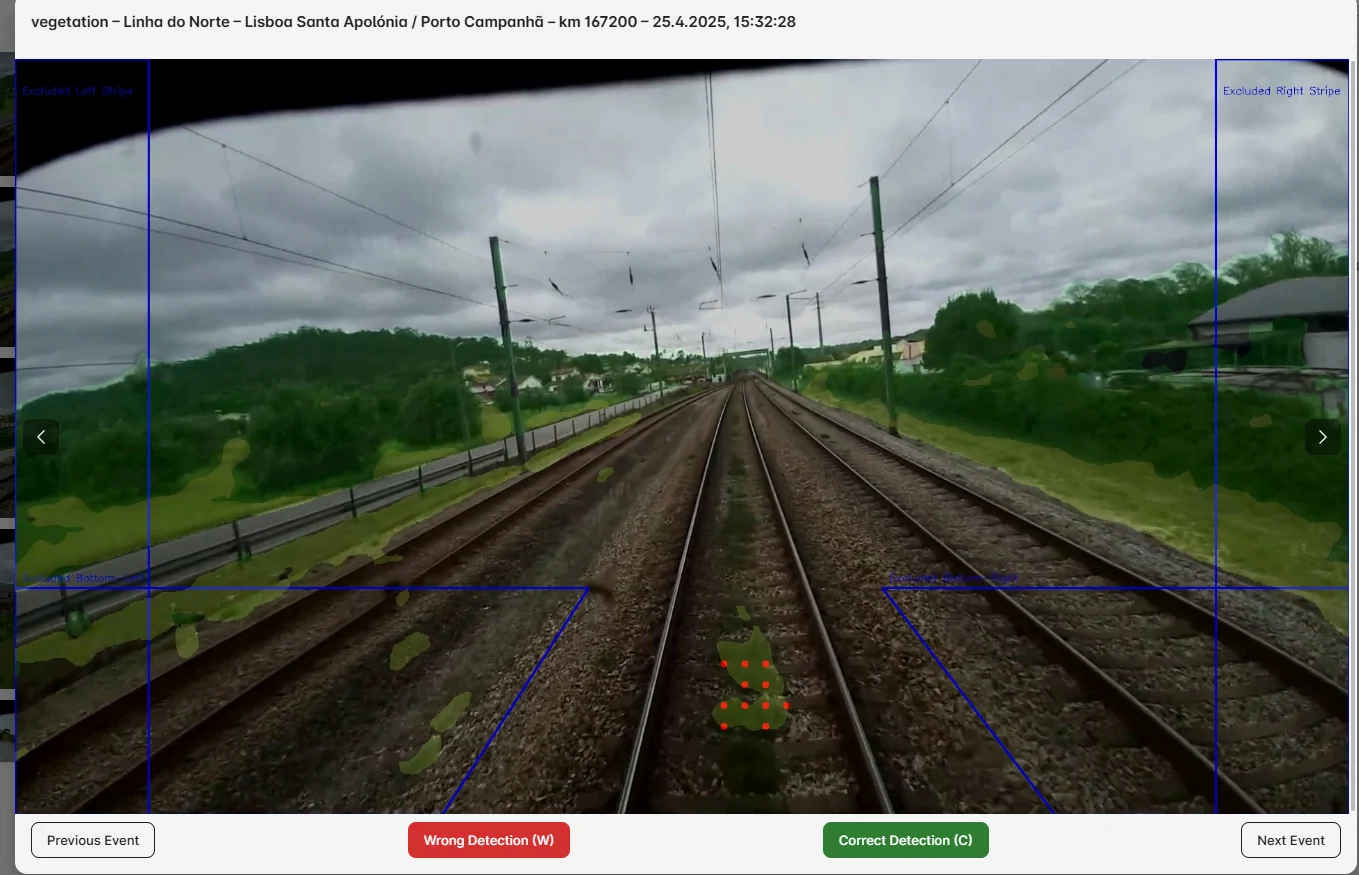
Vegetation workflow
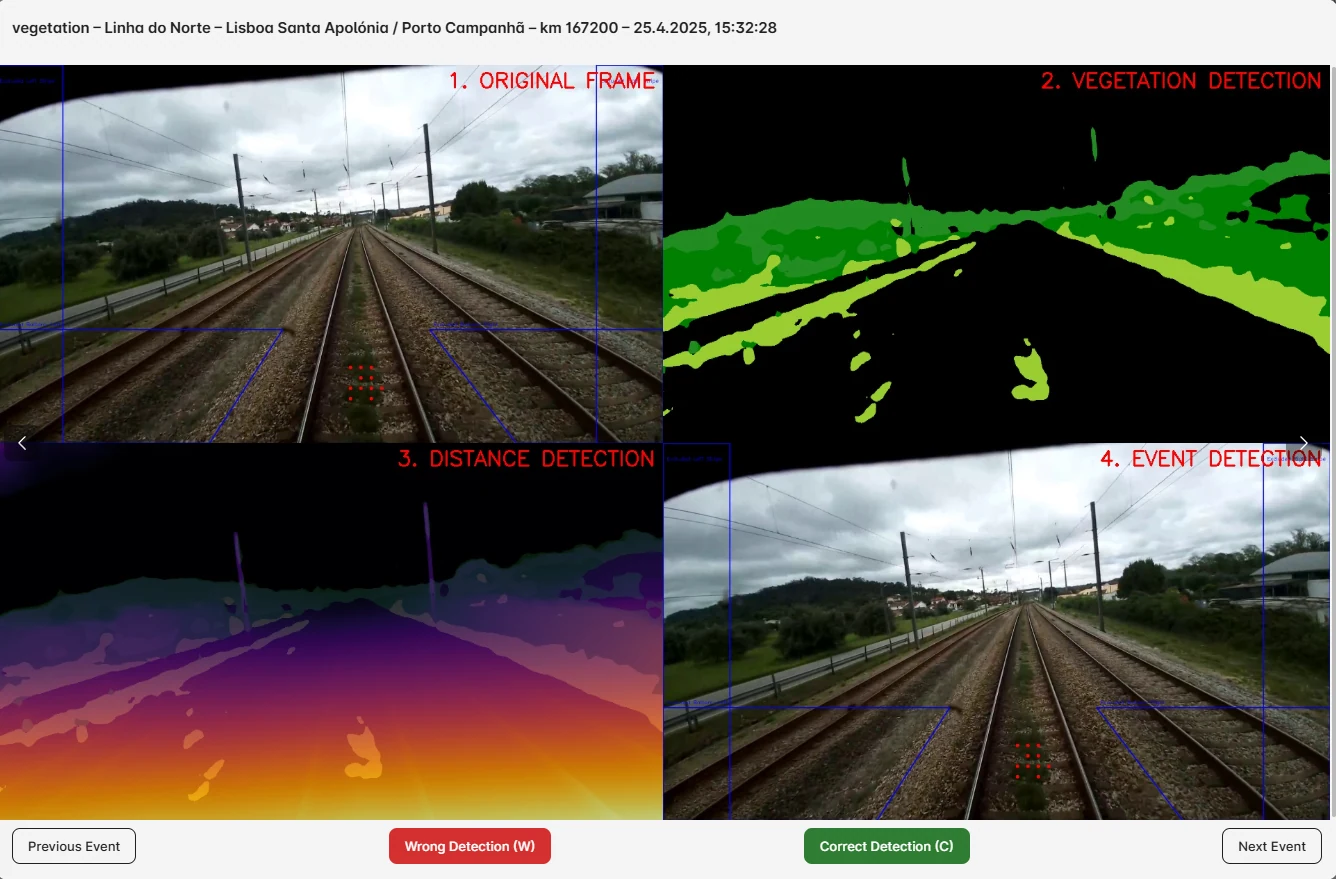
RailEyes turns captured corridor imagery into reviewable vegetation events by combining rail-trained segmentation, zone-aware filtering, depth context where appropriate, and operator validation. Corrected findings can feed retraining so the model improves around real railway conditions.
Rail-specific vegetation classes for corridor review.
Zone and distance context to reduce review noise.
Human validation for operational confidence and model improvement.
Operator value
Teams can move from disconnected imagery to structured vegetation events, validation status, and location-based maintenance planning.
Investor value
Validated rail-specific vegetation data can become a defensible dataset for infrastructure inspection, seasonal planning, and future predictive maintenance.
Workflow
Outputs